

Description
Description
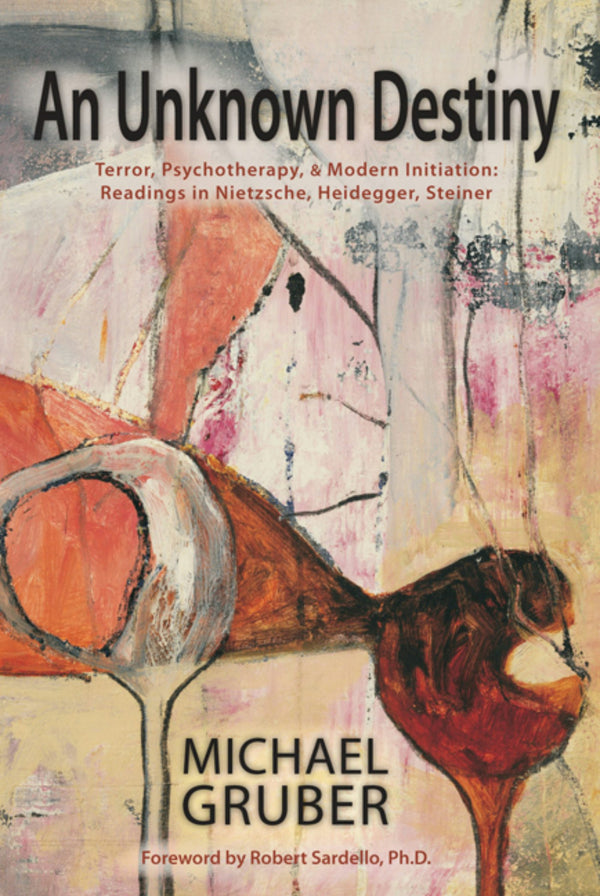
Beginning with a consideration of Nietzsche’s inflammatory and critical insight that the modern world is framed by the death of God, Michael Gruber confronts contemporary disenchantment and its necessary offspring, the “universalization of terror.” By making truth relative, negating the value of beauty, and rendering questions about the good dubious if not obsolete, terror permeates all aspects of our psychosocial existence with the threat of dehumanization. In response to this terror, which is the fundamental mood of our time, Gruber advocates re-imagining our destiny as a path of initiation.
Describing an inner awakening to the spiritual world, whose earthly manifestation of its inherent divinity invites and necessitates our conscious participation, Gruber offers readings and practices that promote the incarnation of “noble souls.” Referring to the work of Nietzsche, Heidegger, and Steiner, An Unknown Destiny describes how psychotherapy can move beyond healing the ego to transcending the ego. Gruber shows how opening the soul to meditative or intuitive forms of thinking can contribute to the development of new soul faculties of perception and to the experience of moral freedom. Most important, he shows how the incomplete and continuously evolving Mystery of Golgotha can inspire the emergence and presence of modern human beings infused with Christ consciousness―reverence, wisdom, peace, and love.
Frequently Asked Questions
What is the main theme of "An Unknown Destiny"?
How does Michael Gruber propose to address modern disenchantment?
What philosophers are discussed in "An Unknown Destiny"?
How does the book relate psychotherapy to spirituality?