


Description
Description
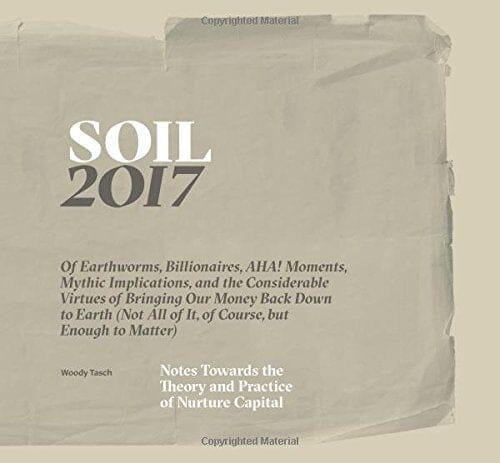
Since 2009, Slow Money founder Woody Tasch has been at the forefront of a new economic story—a story about bringing our money back down to earth.
And it’s not just a story, it’s a movement that has catalyzed the flow of over $60 million to more than 625 small organic farms and local food businesses, via dozens of local groups in the U.S., Canada, France and Australia. SOIL: Notes Towards the Theory and Practice of Nurture Capital uses poetry, essays, and photography to explore a new vision of finance. It is about billions and trillions of dollars in the global economy, and billions and trillions of microbes in healthy, fertile soil. Nurture capital starts where investing and philanthropy leave off, giving us a new way to reconnect to one another and places where we live, all the way down to local food systems and the soil. Of his first book, Inquiries into the Nature of Slow Money: Investing as if Food, Farms and Fertility Mattered, Joan Gussow wrote: “Sometimes books come along at exactly the right time to help us understand where we are headed. Slow Money goes along with Small is Beautiful on my ‘books that matter’ shelf.”
“We need new economic thinking. Meta-economic thinking. Thinking that can get us from the Prudent Man Rule to the Prudent Woman Rule. Tasch has named it: nurture capital. This book is a major new work by someone who is taking his place among some of our most important public intellectuals and activists. A must read—fun, provocative, inspiring—for all who care about food, finance, culture and soil.”
—Leslie Christian, Investment Advisor, Northstar Asset Management
Frequently Asked Questions
What is the main focus of SOIL by Woody Tasch?
What does nurture capital mean in the book?
How does SOIL present its economic vision?
What practical movement stands behind the book’s ideas?