

Description
Description
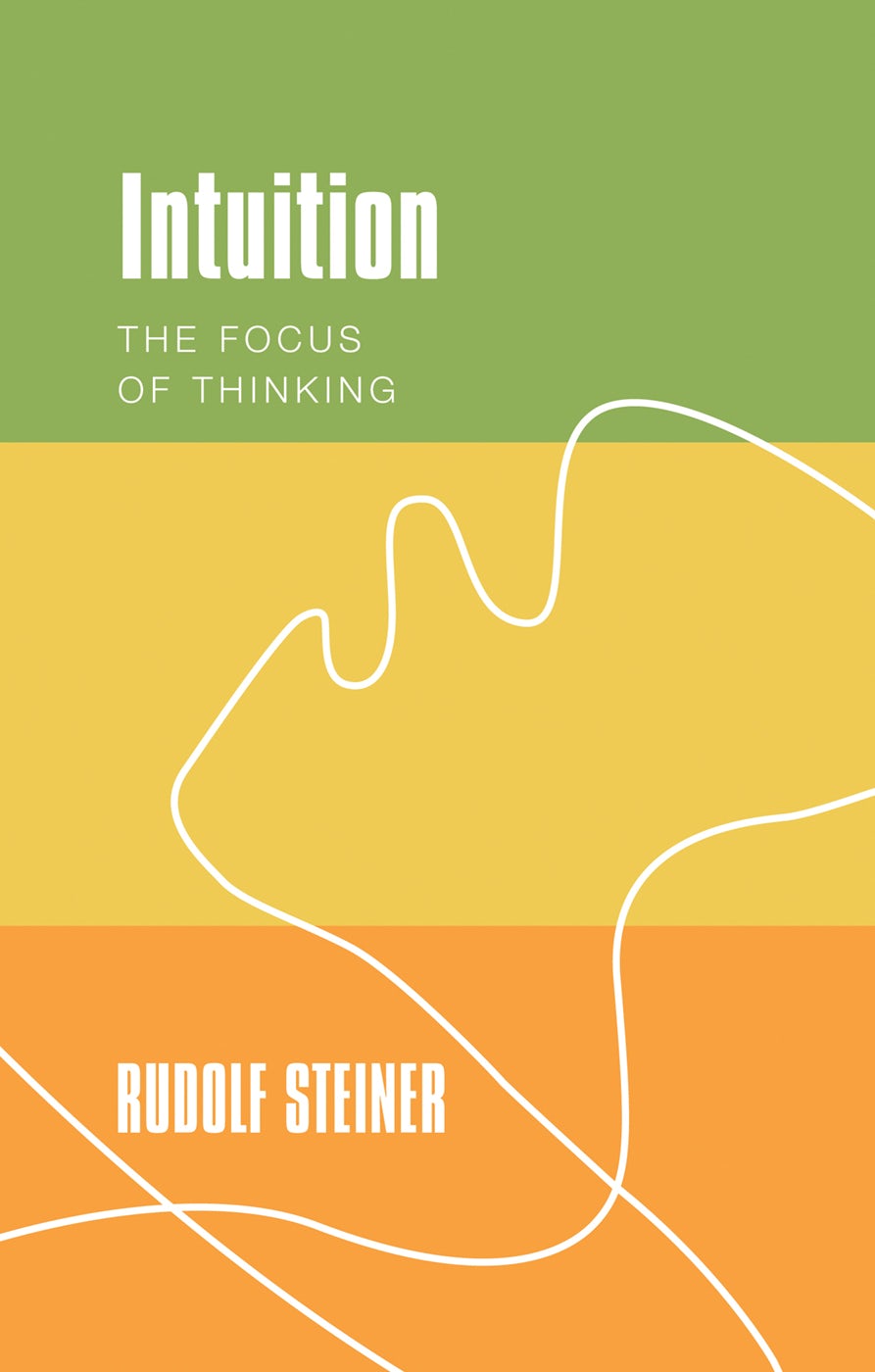
Rudolf Steiner draws a clear distinction between the spiritual meaning of the word Intuition and its conventional definition. As the highest form of spiritual perception, Intuition is existentially significant for our process of knowing. Through systematic self-training, we can develop thinking into an intuitive “organ” through which spirit can be understood and penetrated consciously. Intuition can reveal the essence of spirit and the processes through which human beings and the world manifest, as well as events in our life after death.
In his later works, Steiner spoke of Intuition as a form of suprasensory knowledge that is able to provide direct insight into ordinary, practical life as exemplified in his commentaries on geometry, architecture, education, medicine, eurythmy, painting, and the social organization.
The concept of Intuition is fundamental to Rudolf Steiner’s spiritual philosophy. It denotes a clear, pure mode of comprehension akin to a mathematical concept. We encounter this in Steiner’s earliest writings on Goethe, in the development of his philosophical ideas, and in his numerous lectures and addresses. Ably compiled and introduced by Edward de Boer, this volume clarifies a concept that evolved in Steiner’s thinking. By following the idea of Intuition in its gradual transformation and amplification throughout Steiner’s life of writing and lecturing, this book offers not only inspiring paths to spiritual knowledge, but also insights into how Anthroposophy developed.
C O N T E N T S:
Introduction by Edward de Boer
1. The Perceptive Power of Judgment—Goethe’s Intuition
2. Moral Intuition—Experiencing Thinking
3. The Human Being—Intuition as a Bridge to the Spirit
4. The Schooling Path—Spiritual Development and the Power of Intuition
5. Intuition Exercises
6. Three Stages of Consciousness—Intuition in Relation to Imagination and Inspiration
7. Knowledge of Destiny—Intuition and Repeated Earth Lives
8. Intuition in Practice—Examples from Various Specialist Fields
Notes
Sources
Frequently Asked Questions
What is the main focus of Rudolf Steiner's book "Intuition"?
How does Rudolf Steiner define Intuition?
What topics are covered in "Intuition" by Rudolf Steiner?
Who compiled and introduced this edition of "Intuition"?