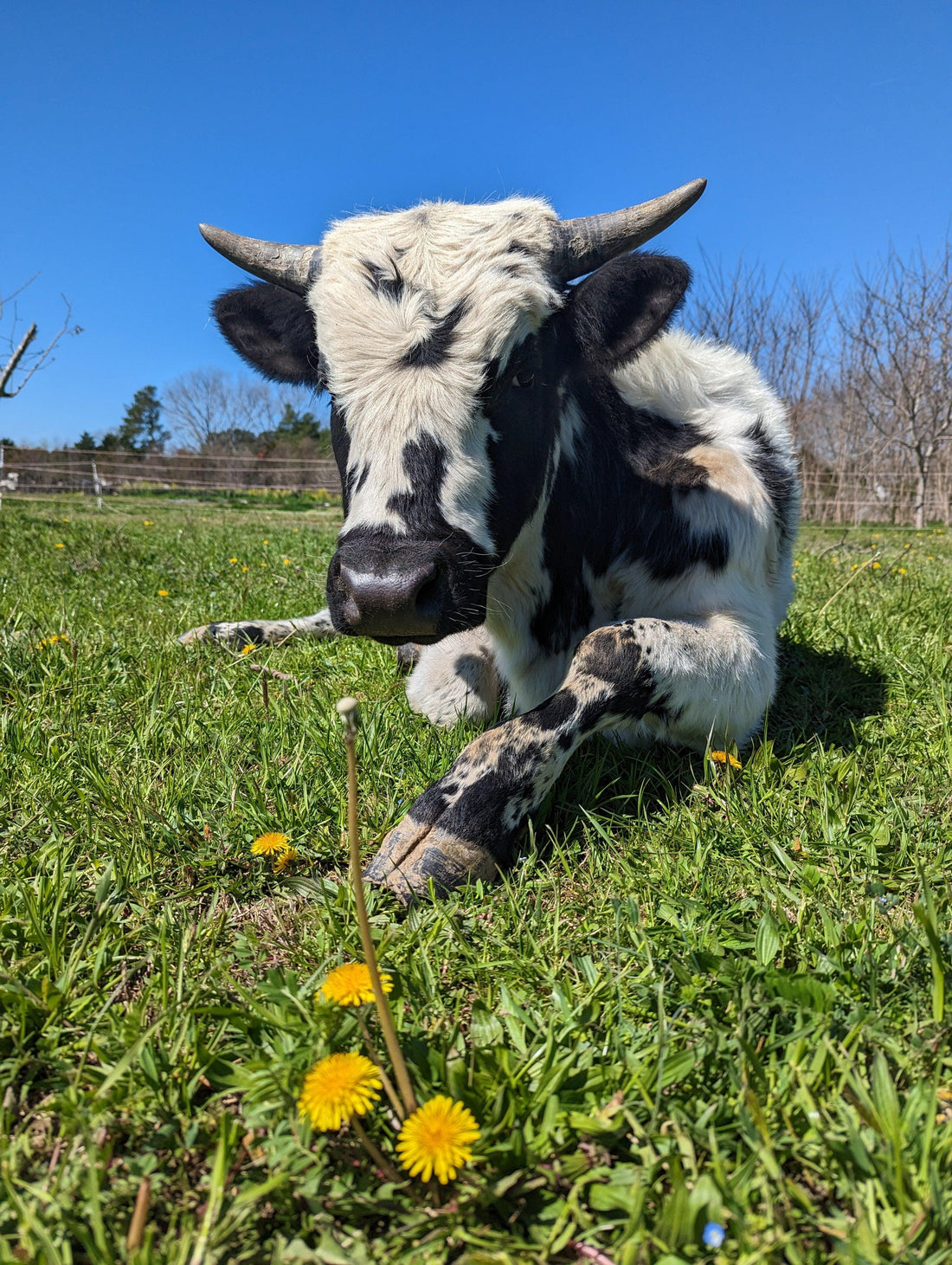
Cattle, flowering pasture, and pollinators are connected parts of a living farm. A North Dakota grazing comparison measured more flowering species and butterflies in cattle-grazed than sheep-grazed pastures under patch-burn management.
Partager
Animals help shape the landscapes around them. In his writings on farming, Karl König explored relationships among land, plants, animals, and people. The image of cows creating meadows invites biodynamic growers to notice how grazing and rest influence what flowers across a pasture.
A three-year North Dakota field comparison by Cutter and colleagues gives this image a measured example. In former Conservation Reserve Program pastures managed with patch-burn grazing, cattle-grazed fields averaged 6.9 flowering plant species per transect, compared with 3.8 in sheep-grazed fields. Researchers also counted an average of 75 butterflies per transect with cattle, compared with 52 with sheep. These are results from that cattle-versus-sheep grazing comparison and management setting.
On a biodynamic farm, the practical invitation is to watch flowering plants, pasture cover, regrowth, and pollinator activity as cattle move and fields rest. Stocking, movement, and recovery time can be adapted to the land. In that living pattern, the relationship among cows, meadows, and bees becomes something to observe and steward season by season.
What does the image Cows Create Meadows invite us to observe?
It points to the relationship among grazing animals, pasture plants, and pollinators. By observing what flowers after grazing and rest, growers can care for a meadow as a connected living landscape.
What measured flower result supports this pasture picture?
A 2017–2019 North Dakota comparison of former Conservation Reserve Program pastures under patch-burn grazing counted an average of 6.9 flowering plant species per transect with cattle, compared with 3.8 with sheep.
What did the same grazing comparison find for butterflies?
The cattle-grazed pastures averaged 75 butterflies per transect, compared with 52 in the sheep-grazed pastures. This links flowering pasture care with a measured pollinator observation.
What should a grower observe when managing a flowering pasture?
Record flowering species, plant cover, pasture regrowth, bare ground, and pollinator activity through grazing and rest periods. Use those observations to adjust stocking, movement, and recovery time for the site.