One unit is 1 ounce.
One unit treats 1–1.5 tons (1.5–2.25 cubic yards) of material.
Plan the number of Starter units from the material being built into the pile, using the coverage above. A desired weight of finished compost per acre does not, by itself, tell you the starting pile quantity or the number of Starter units. Keep the compost-making dose separate from the later field application rate.
When the starting pile quantity is known, plan conservatively at one one-ounce unit per ton of known starting material being built into the pile, and round any fractional count up to a whole unit. For 10 tons of known starting material, recommend 10 units rather than the seven-unit minimum at the highest coverage. Pile volumes vary with the actual material; do not treat an approximate cube size as a fixed tonnage conversion. If the customer gives only a target of 10 tons of finished compost, first ask how much starting material will be treated; the finished target alone does not set a unit count.
Learn more: What is the Pfeiffer Compost Starter?
At a Glance:
What it does:
Kickstarts compost piles and helps them break down faster and more completely. Especially helpful when compost materials are not ideal or weather is challenging.
How to use:
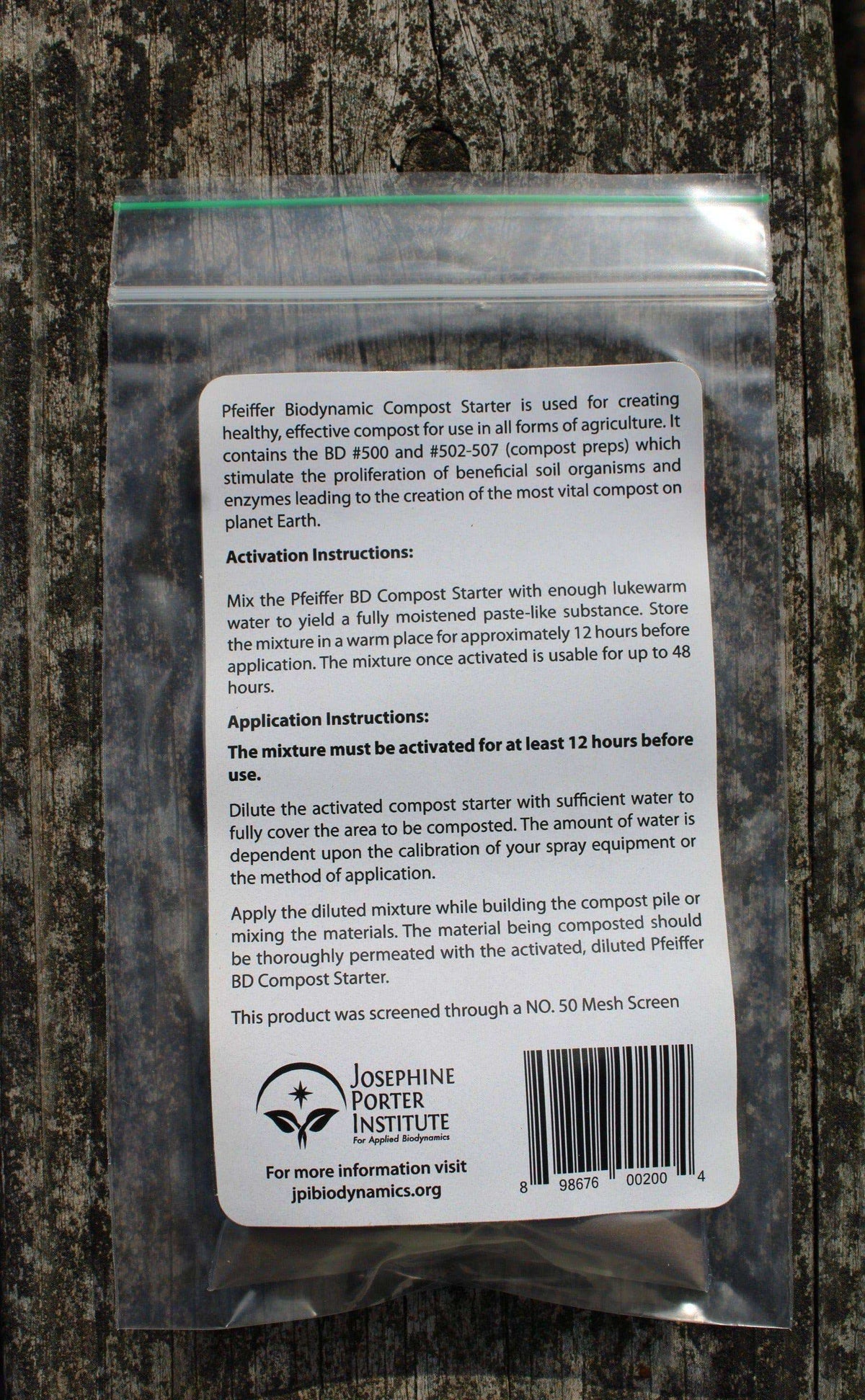
Moisten one unit in a flat pan or dish with just enough water to make it pasty. Allow it to activate for 12–16 hours or overnight. Then dilute the paste in enough water to thoroughly moisten each layer of the compost pile, sprinkling or spraying the solution on each layer as the pile is built.
Ingredients:
Dried blend containing BD 500 and BD 502–507, plus beneficial bacteria, enzymes, fungi, and other agents.
Product Details:
The Pfeiffer™ Compost Starter is a specialized recipe developed by Dr. Ehrenfried Pfeiffer for improving composting operations.
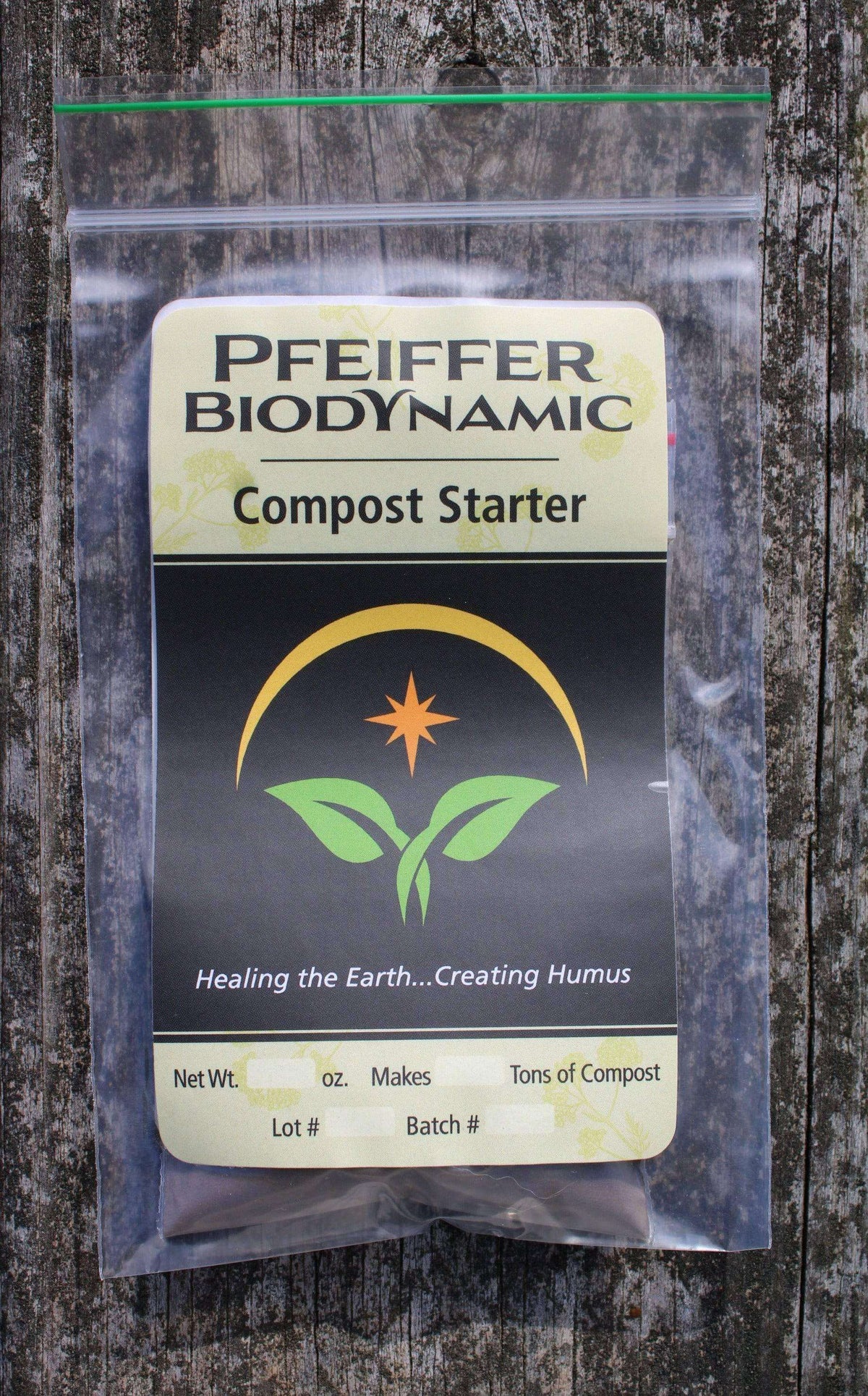
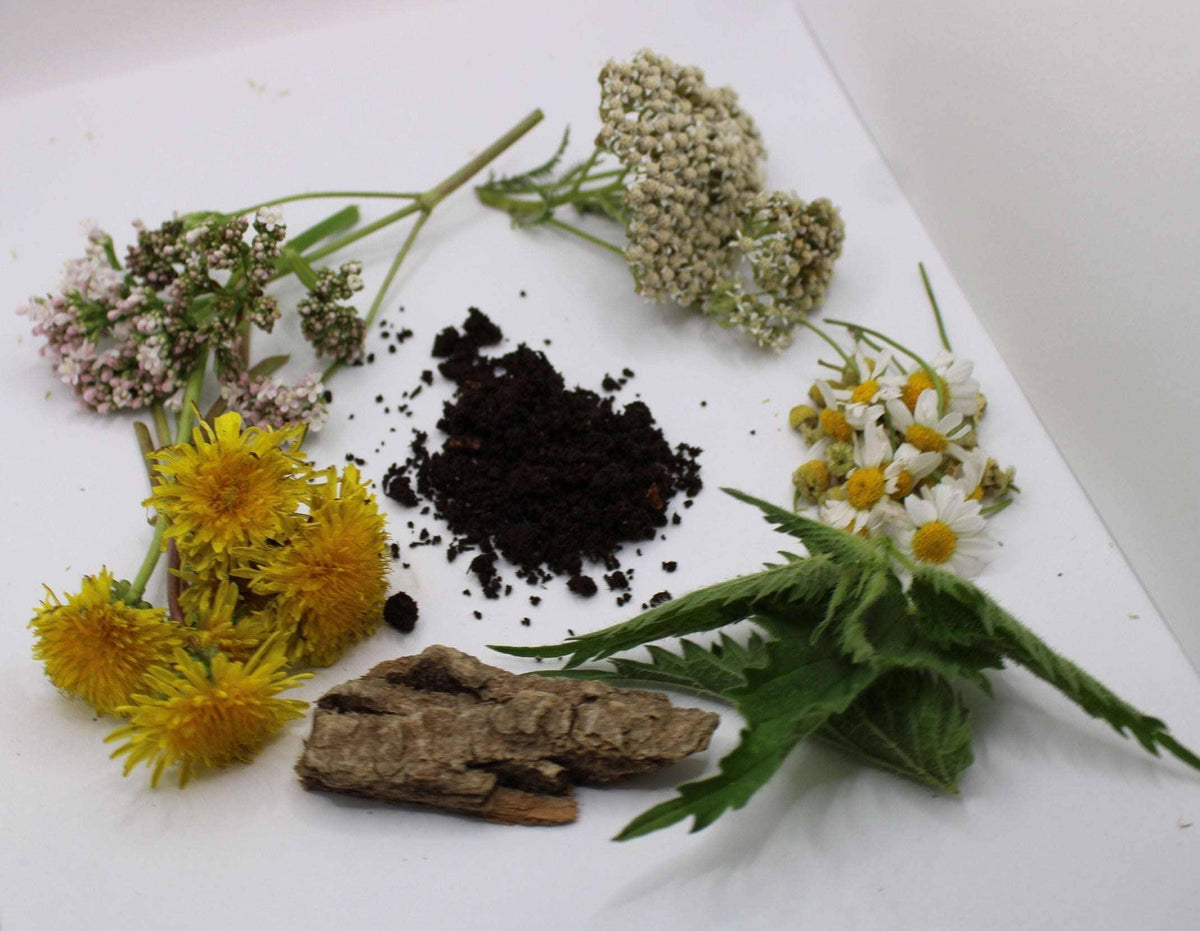
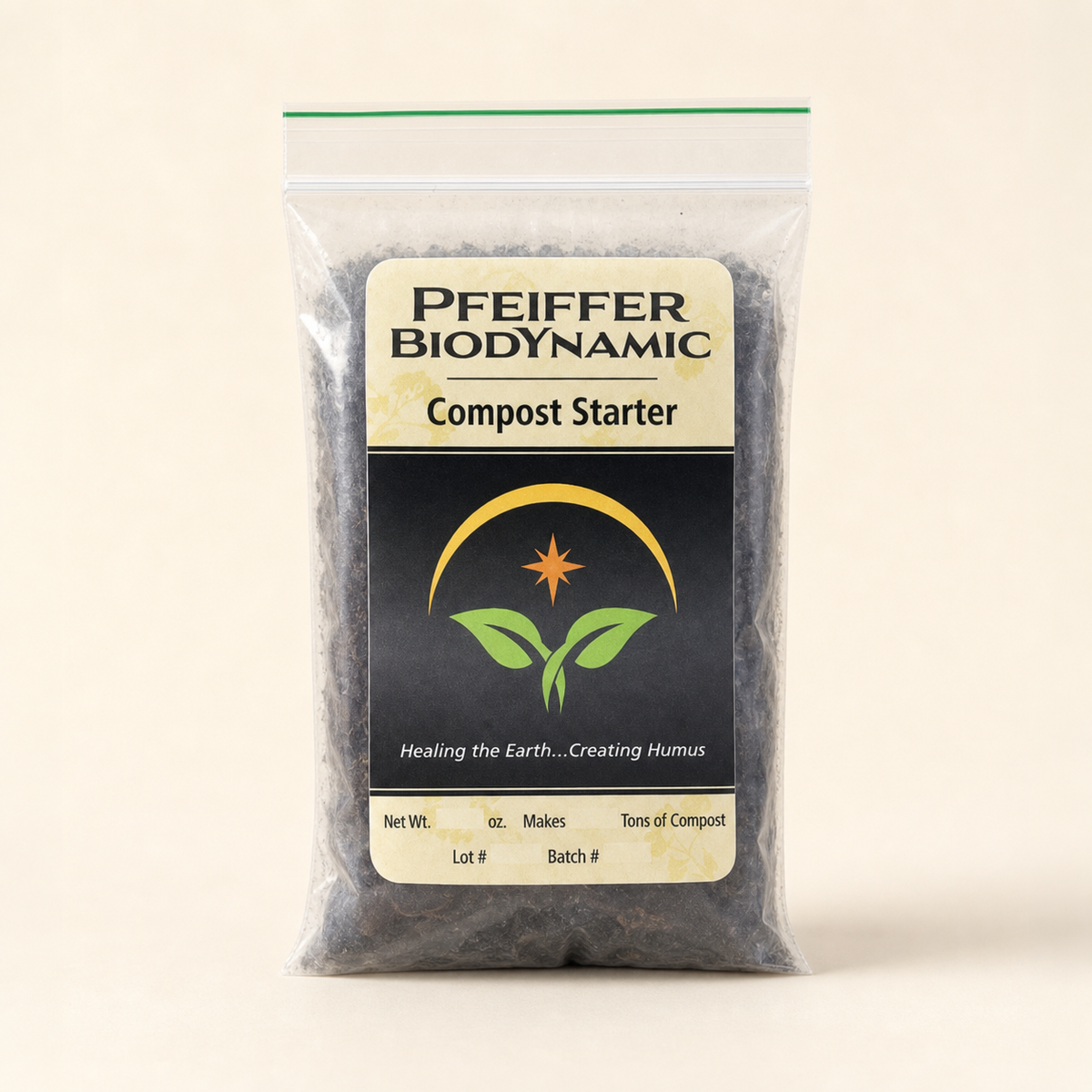
Among our most popular selling items, Pfeiffer™ products were originated in the 1940’s by Dr. Ehrenfried Pfeiffer with the purpose of helping to make biodynamics more accessible to home gardeners, conventional farmers, and composters. JPI is the exclusive owner of these proprietary formulas. The Pfeiffer™ Biodynamic (BD) Compost Starter contains all of the compost preparations (BD #502-507), Horn Manure BD (#500) plus beneficial soil bacteria, enzymes, fungi, and plant growth-promoting factors which increase the proliferation of microorganisms resulting in more rapid decomposition of materials, stabilization of nitrogen, and transformation to colloidal humus.
The Pfeiffer™ Compost Starter offers the benefits of the Complete Set of Biodynamic Compost Preparations plus a wide range of diverse microbiological cultures and enzymes.
Composition of the Pfeiffer™ BD Compost Starter This potent Compost Starter contains the biodynamic agricultural preparations BD #500, #502, #503, #504, #505, #506, and #507, which give this product its unique effectiveness. It also contains beneficial soil bacteria, enzymes, fungi, and plant growth-promoting factors. Properly prepared for use, each ounce can yield more than 1.36 billion CFU’s (colony forming units) of beneficial organisms.
Benefits of the Pfeiffer™ BD Compost Starter This Compost Starter helps to ensure proper introduction of the BD preparations with minimal knowledge of biodynamic agriculture. It is unequaled in its composting effect, yielding a rapid breakdown of material. Under proper conditions of moisture, aeration, and organic matter (as given in the Carbon/Nitrogen ratio below), the BD Compost Starter will:
- Quickly decompose raw organic matter, breaking it down into simpler compounds
- Re-assemble these simple compounds into complex long-lasting humus
- Fix nitrogen from the air and otherwise make it available for plant nutrition
- Increase the availability of minerals, transforming them into their available form
- Hold the soil and improve its structure
- Prevent leaching and washing away of soil, and lessen or eliminate erosion
The special humus producing character of the BD Compost Starter yields high quality compost full of beneficial soil organisms and colloidal humus. Benefits include:
- Improved soil structure. Soil is easier to prepare and cultivate
- Improved water drainage. Water more readily is absorbed and penetrates deeper.
- Root growth is stimulated.
- Nitrogen release is steady and without losses.
- Nutrients are preserved and made available. Absorption of nutrients is facilitated.
- Health soil micro-life is fostered and maintained.
One unit (one ounce) of BD Compost Starter is sufficient for approximately 1 to 1.5 tons (or 1.5 to 2.25 cubic yards) of material. One unit is the smallest quantity we can ship. One ton will be a cube of material measuring on average 4.5’ x 4.5’ x 4.5’ for most materials intended for composting. Activation of one ounce should be sufficient for up to 1.5 tons.
Choose complementary raw materials for the compost pile
Pfeiffer’s raw-material checklist looks at fertility value, structure and moisture, ease of handling, whether and how each material decomposes, the aeration and biological action needed, and the intended finished compost. Choose suitable complementary materials for the pile, then follow JPI’s current moisture, construction, activation, and dose directions above and in the linked instructions. This checklist concerns the pile’s compost feedstocks, not the Starter’s own ingredients list.
Source: Ehrenfried E. Pfeiffer, The Compost Manufacturer’s Manual (1956), Chapter 2, printed p. 21.
Pfeiffer Compost Starter Detailed Usage Instructions: English | Chinese
Please note: Quantities over 1 may be bagged together.