:29 Josephine Porter Institute for Applied Bio-Dynamics, Inc. | Home

Our mission is to heal the earth...you can join us.

We have been supporting gardeners and farmers in their practice of biodynamics
since 1985. We provide:

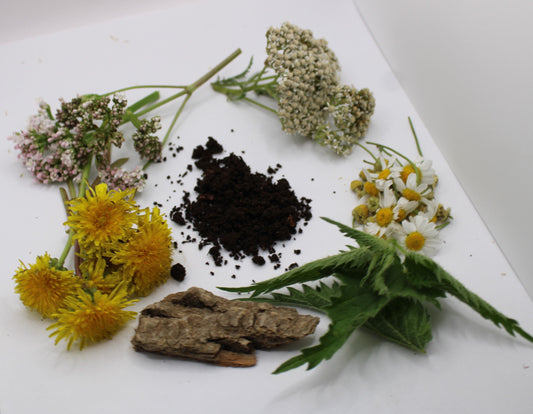
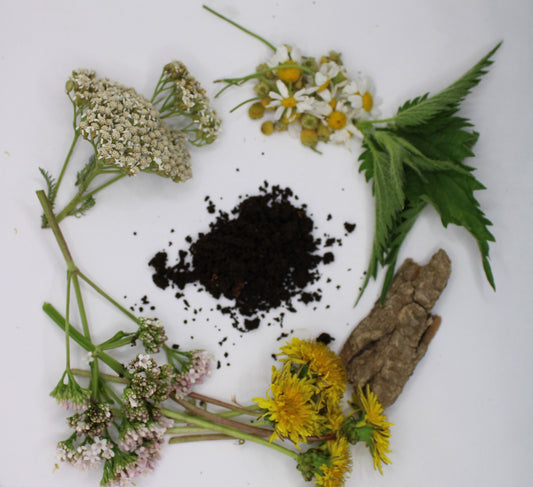
Biodynamic Preparations of the highest quality for plants, fields and compost.
Educational Workshops and Consultation to gardeners and farmers.
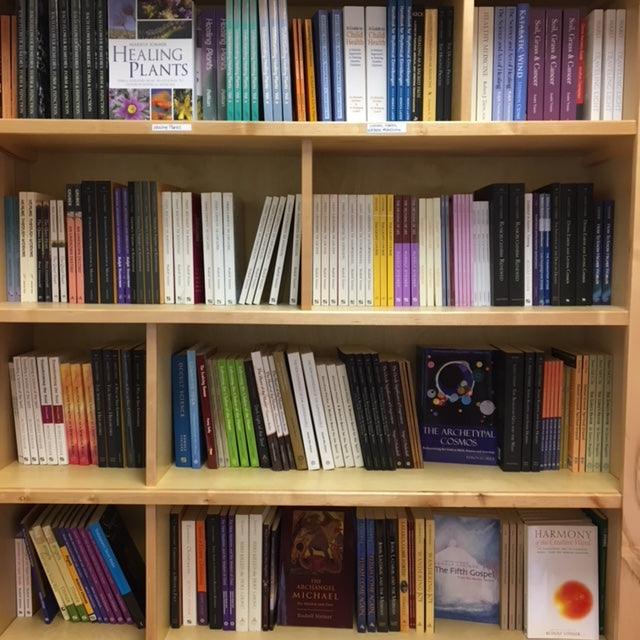
Books on biodynamics and related topics.
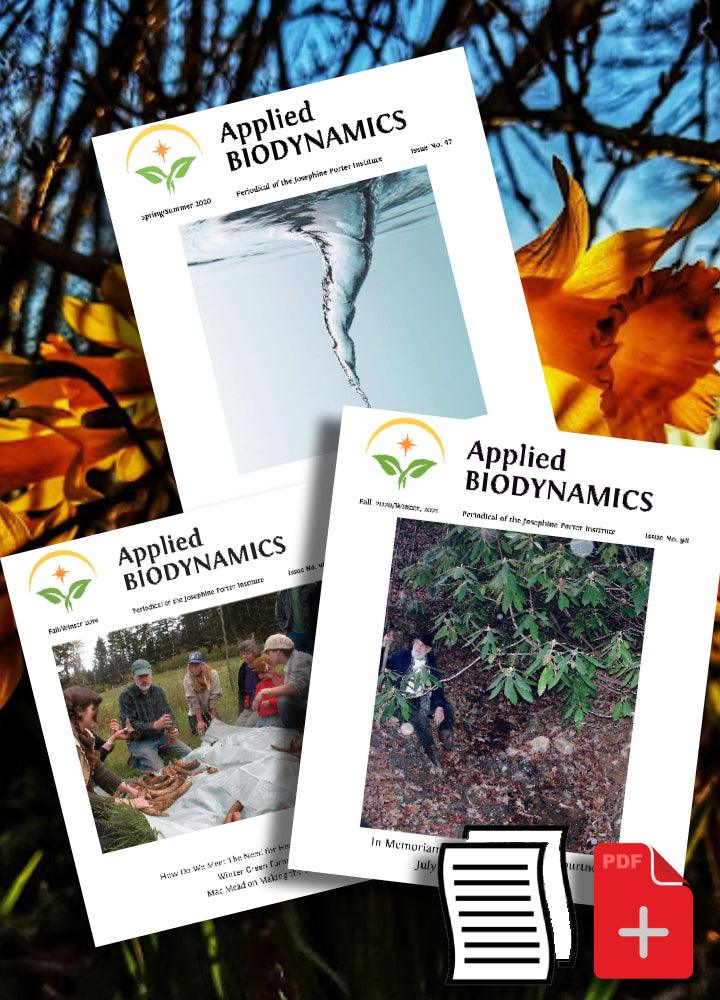
Applied Biodynamics, our quarterly newsletter.
E-news updates to keep you up-to-date on biodynamic happenings.
Research to support the practice of biodynamics.

Biodynamics takes you beyond organics and offers you a roadmap to enhance the vitality of your farm or garden. Biodynamic preparations and indications for planting, cultivating and harvesting allow you to work with the life forces that increase the physical health of your soil, plants and animals.

"Nature is a great totality; forces are working from everywhere. He/she alone can understand Nature who has an open sense for the manifest working of her forces." - Rudolf Steiner

"The most important thing is to make the benefits of our (BD) preparations available to the largest possible areas over the entire earth, so that the earth may be healed and the nutritive quality of its produce improved in every respect." - Rudolf Steiner

"In compost we have a means of kindling the life within the earth itself." - Rudolf Steiner


SORRY THE STORE WEBSITE IS DOWN

SORRY THE WEBSITE IS DOWN AT THIS TIME. PLEASE CALL IF YOU NEED TO PLACE AN ORDER. 276-930-2463

THANKS


ASSOCIATIVE CONTRACT

Advantages: Discount up to 20% Plus Free Consultation

Starting January 2012, Final Deadline March 31, 2012

APPLIED BIODYNAMICS Newsletter of the Josephine Porter is $30.00 four issues per year. However, if you have an Associative Contract we will offer your subscription for only $20.00 per year.


Queen of the Sun

DVD

Queen of the Sun is now available to order on DVD for University, College and K-12 library and classroom use.

For public viewings, a public screening license is required. Please contact us if you wish to purchase public viewing rights.

In English | 82 Min. | NTSC | All Regions

English Closed Captioning

Subtitle Options: German
Home Use DVD

The Queen of the Sun DVD licensed for non-theatrical, personal home use is now available for PRE-ORDER!

In English | 82 Min. | NTSC | All Regions

English Closed Captioning

Subtitle Options: German
House Party & Community Screening Licenses

Bring QUEEN OF THE SUN: What are the Bees Telling Us? to your community and be part of a growing movement to help save the honeybee. Hosting a Community Screening is a fun way to inspire, empower and educate friends, family and neighbors about this crisis. One screening at a time, you’re helping reconnect people to their backyards, nature and our plane


BOOK REVIEWS – NEWLY RECEIVED TITLES:

BOOK REVIEWS – NEWLY RECEIVED TITLES:

JPI has recently added the following new titles

Osthaus, Karl-Ernst, The Biodynamic Farm – Developing a Holistic Organism, Floris Books, Edinburgh, Scotland, UK, 2010. (First published in German in 2004). 93 pp. $14.95

To my knowledge this is one of the few available titles in biodynamic literature that makes an effort to address Rudolf Steiner’s concern that the farm “individuality” ought to possess the ‘due amount of cattle.’ Steiner expressed that concern at the very beginning of the second lecture of the Agriculture course, and while many people have subsequently spoken and written about the farm individuality, the author of this book has managed to translate that term into a practical example of how that individuality manifests through the animal kingdom on a specific farm. In developing his own farm, Karl-Ernst Osthaus apparently took very seriously the question of determining the “due’ number of cattle, sheep, pigs, chickens and other animal members of proper biodynamic farm individuality.
While his experience must be seen in the context of his particular farm, it is most helpful to have such a picture available in developing one’s own farm. He gives a very specific emphasis to the development of hedgerows between fields not only as a “fence” to separate pastures, but also as important forage for the livestock and habitat for the birds, insects and other wild animals.
It would have been most helpful if the author had provided more details on exactly how he arrived at the several livestock populations. Regrettably, he is deceased, and one cannot seek answers to some of the questions that might arise when reading some of his statements and conclusions. However, that forces one to arrive at answers for one’s own farm individuality, which is precisely how it should be for the biodynamic practitioner.
The one major criticism of the book I found is his description of the production of the preparations in the latter part of the book. In several instances, his description deviates from Steiner’s indications in ways that I would judge quite serious and such as would affect the ultimate efficacy of the finished preparation. Digging up BD #501 at Michaelmas does not qualify as “late fall” as Steiner’s instructions state. BD #502 is made in early summer, hung in a sunny place, buried around Michaelmas and dug up at Easter, and the contents of the bladder are stored in an earthenware pot. This is a process which ignores Steiner’s requirement that the yarrow spend a full year in the bladder. Unfortunately, the time frame described seems to be a practice that is widely followed among biodynamic practitioners, to the probable detriment of the finished preparation. In like manner, the author’s description of the making of BD #504 omits the indication Steiner gave that the stinging nettle should spend the winter in the earth and through the following summer. I believe most sincerely that we cannot allow ourselves to blithely ignore the complete indications Steiner gave for the making of the biodynamic preparations. To do so can only be a detriment to achieving the maximum quality and effectiveness of the resultant preparations. It is most distressing to realize that somehow over the years certain modifications have crept into the instructions for making the preparations and are subsequently perpetuated in otherwise valuable biodynamic writings.

Petherick, Tom, Biodynamics in Practice – Life on a Community Owned Farm, Impressions of Tablehurst and Plaw Hatch, Sussex, England. Photography by Will Heap. Sophia Books (an imprint of Rudolf Steiner Press), Forest Row, England. 132 pp. $38.00

This book features an abundance of photographs (thus the expense) detailing the transition of two struggling farms to ownership by an entire community. These two farms in the immediate neighborhood of Emerson College in England formed a cooperative beginning in 1995 with the people living in their vicinity to establish themselves as a major focal point of the community. The text and the photographs describe the many aspects of both farms and the important role they have within the surrounding community. The message of the book is stated as follows: ‘Biodynamics seeks the holistic and interrelate health of the diverse creatures and beings composing a farm, including human beings and the wider, surrounding community.’ Biodynamics is identified as not just a “method” but a whole approach to life. The model developed here is one that may be highly appropriate for emulation in England, but it is probable that other parts of the world will need to develop their own unique models of biodynamic farming support within a surrounding community. One such example that comes to mind is the Sekem endeavor in Egypt.

The lack of captions for the photos in at least a few cases is a drawback to the message being communicated, but altogether the book presents a very positive case for biodynamic agriculture as an important factor in influencing the culture within society as a whole.


Biodynamic Remedies for Tomato and Potato Blight

Biodynamic Remedies for Tomato and Potato Blight

1. Bring 1 unit #508 (1.5 ounces by weight of dried herb) to boil in 1 gal H2O, and simmer for 1 hr.

2. Cool and transfer to crock or glass container ( metal? plastic?) - Order of preference is clay crock, glass, copper, porcelained metal, non-magnetic stainless steel, other metals, plastic.

3. Store in cool place and let ferment for 10-14 days until starts to smell.

4. To use add 1 part #508 tea (fresh or fermented) to 9 parts water, (rainwater, or if chlorinated expose to sun for a day).

5. Stir for 20 minutes, reversing direction once deep vortex has formed. (about 1-2 times per minute).

6. Early AM or Late PM-Spray on ground with larger droplets on day pertaining to the crop - Fruit for tomato; Root for potato. May be applied as a foliar as well.

Adding either with the #508, or separately an application of BD #505 Oak bark preparation (counter to plant diseases) is also very helpful. Stir #505 for not less than 20 minutes.

Applications of BD #501 and BD #507 should also be made in the regular course of treating the crops.

BD #508 (Horsetail Herb) is available now at JPI

http://www.jpibiodynamics.org/node/255

Or Call us to order. (276) 930-2463

BD #508

For preventing or controlling fungus diseases. One unit of dried herb yields 2 1/2 gallons fresh tea (covers one acre), or 10 gallons of fermented tea (covers up to 3 acres). Best results obtained from fermented recipe.

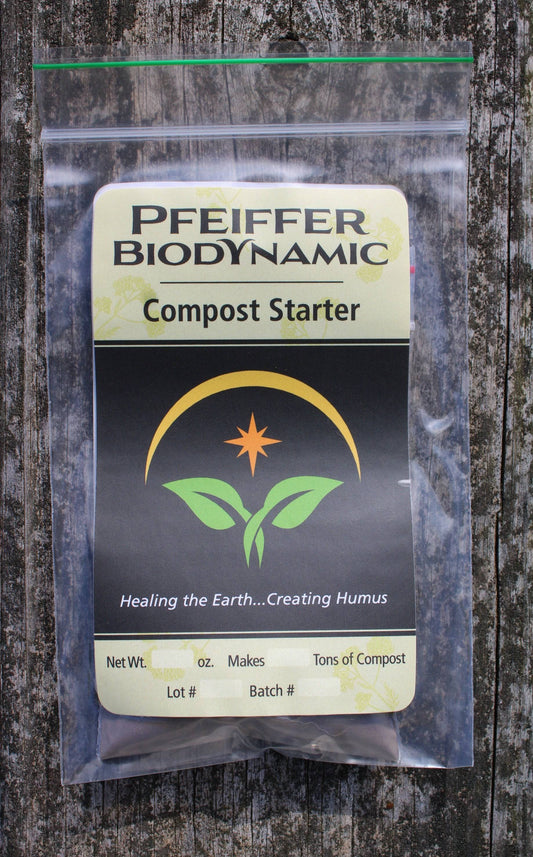
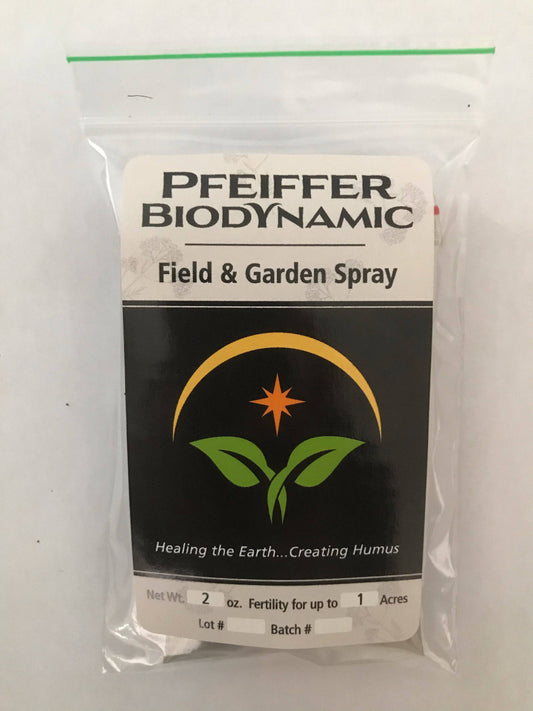
JPI is a full service biodynamic information center with biodynamic preparations, Pfeiffer products, the BC (and the Pfeiffer F&G Spray) for amelioration of radioactive impacts as well as an extensive selection of books on biodynamics and Rudolf Steiner's other contributions to human evolution.

Please visit our website for more information http://www.jpibiodynamics.org/home


Josephine Porter Institute (JPI) Certification On BD Preps

Please Note: All Biodynamic Preparations are listed by OMRI in the Generic Materials List as follows -

Biodynamic Preparation
Status:Allowed
Class:Crop Management Tools and Production Aids
Origin:Nonsynthetic
Description:
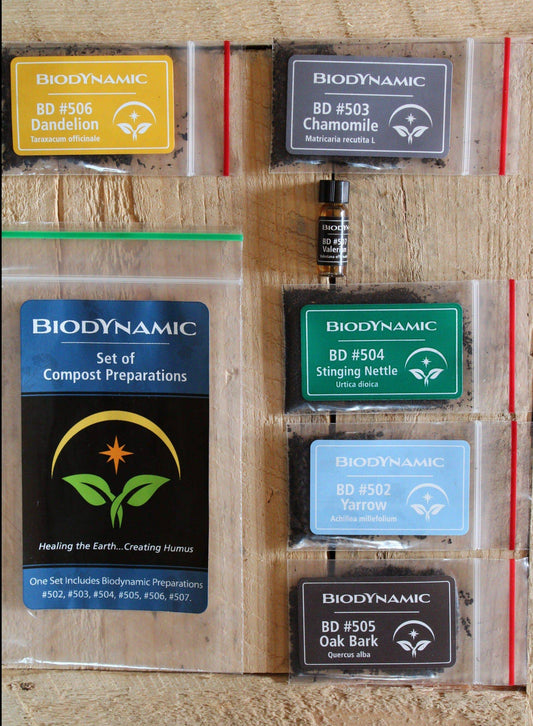
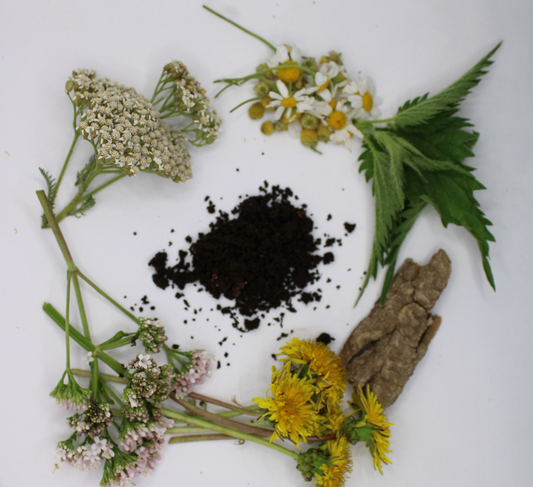
Includes horn manure spray (500) horn silica (501), yarrow flowers (502), chamomile (503), stinging nettle (504), dandelion (506), valerian (507), and horsetail (equisetum)spray (508).

Please call or email for a copy of Products for Use in NOP Organic Farm Production.


BD #508 - Horsetail Herb

BD #508 - Horsetail Herb
(an important tool to balance and encourage moisture)

BD #508 (Horsetail Herb) is available now at JPI

http://www.jpibiodynamics.org/node/255

Or Call us to order. (276) 930-2463

BD #508

For preventing or controlling fungus diseases. One unit of dried herb yields 2 1/2 gallons fresh tea (covers one acre), or 10 gallons of fermented tea (covers up to 3 acres). Best results obtained from fermented recipe.

JPI is a full service biodynamic information center with biodynamic preparations, Pfeiffer products, the BC (and the Pfeiffer F&G Spray) for amelioration of radioactive impacts as well as an extensive selection of books on biodynamics and Rudolf Steiner's other contributions to human evolution.

Please visit our website for more information http://www.jpibiodynamics.org/home

Josephine Porter Institute for Applied Biodynamics, Inc.
P.O. Box 133
Woolwine, VA 24185-0133

www.jpibiodynamics.org

(276) 930-2463


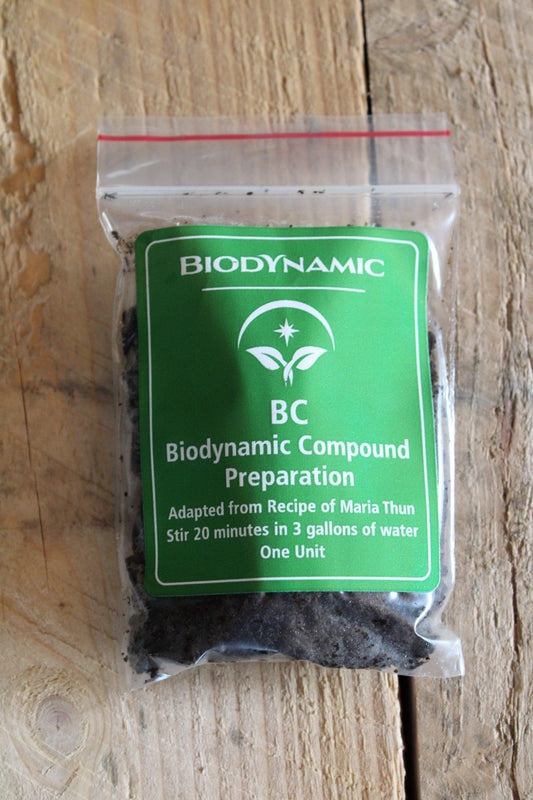
BC - Biodynamic Compound Preparation - Remedy for Radioactivity

BC-Biodynamic Compound Preparation is available at JPI http://www.jpibiodynamics.org/node/403 BC

And in Japan through Ben and Konomi.
Seikatsu Gakko and BD Farm

707-1 Nishi Biribetsu

Honbetsu- Cho,Hokkaido,Japan,

089-3443.info@oubdfarm.com

or by telephone 090-5959-3660

JPI has given many workshops in which numerous people have been taught to make their own BC.

JPI may be able to arrange for you and your gardening group to have your own workshop on your site with an instructor who has been through a JPI workshop on BC.

Call us for possibilities. (276) 930-2463


Radioactive Food? - Not with Biodynamics!

One of the world's best kept secrets, or perhaps most suppressed, is that food grown biodynamically using one particular preparation results in crops free of radioactive contamination. That preparation is the BC-Biodynamic Compound preparation or as it is popularly known, the Barrel Compost recipe of Maria Thun. It has also been called Manure Concentrate, Fladenpreparate, and CPP or Cow Pat Preparation.

This preparation was in development by Maria Thun from 1958 to 1972. In 1986, after the Chernobyl disaster, certain biodynamic farms using the BC did not show radioactivity readings although neighboring conventional farms as well as biodynamic farms not using the BC were showing radioactive contamination. This information was not recognized by the scientists conducting the tests, because, according to Maria Thun, "---they did not give any written confirmation of this to avoid the claim that a means against radioactivity exists."

Biodynamic research has never been supported by mainstream agricultural science. The nuclear disaster in Japan serves as a reminder of the importance of this research. Funding is desperately needed to further this research to prove the efficacy of Biodynamics.

To see what ongoing research JPI is conducting please visit JPI's Research Projects page http://www.jpibiodynamics.org/research_projects. Any donations or assistance with grants is always welcome and appreciated.

Josephine Porter Institute for Applied Biodynamics, Inc.


Syndicate content